Anthropic shipped seven Claude Code changelog releases in six days this August, and two of them carry changes that affect real money and real workflows: a migration command for the Python SDK 1.x break, and plugin sync from claude.ai. This digest reads the full official changelog so you don’t have to, and groups what matters by the job it touches.
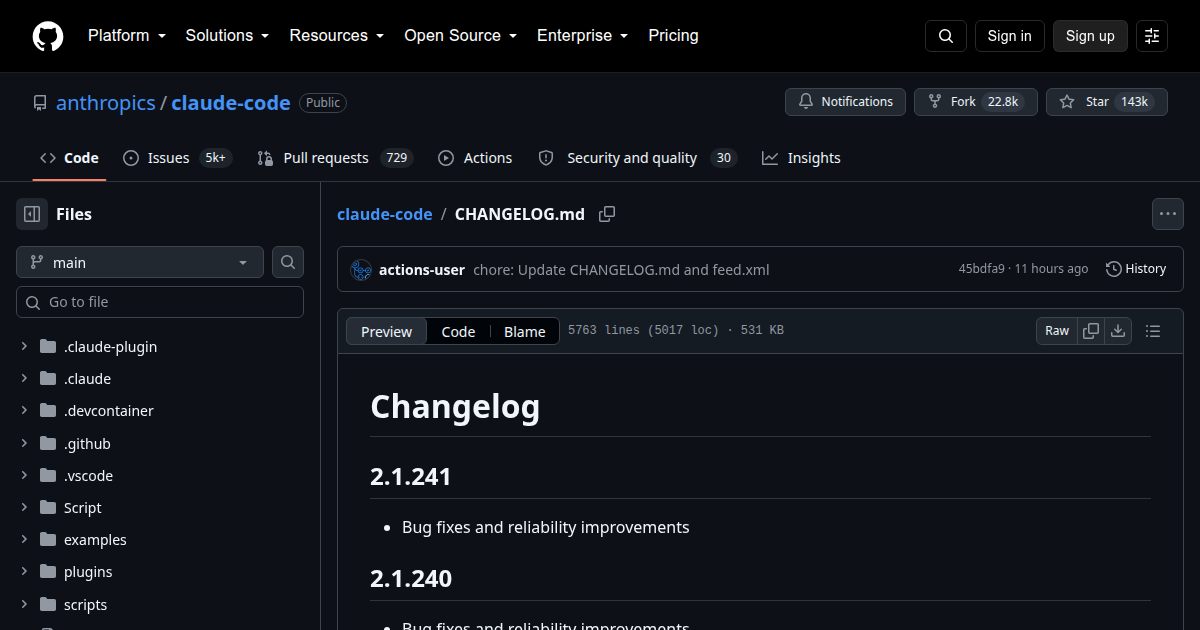
The seven releases span 2.1.235 on August 18 through 2.1.241 on August 23. Most are quality batches; 2.1.239 alone lists 59 changes. Rather than walking the list top to bottom, the entries below are grouped by what they change for you: plugins, the Python SDK, billing, the terminal, and the network path in between.
The Claude Code changelog at a glance: 2.1.235 to 2.1.241
- 2.1.235 (Aug 18) release: optional spellcheck in the prompt input, prompt-cache and permission-dialog repairs.
- 2.1.236 (Aug 19) release: an environment variable for the default model, sandbox tightening on macOS, VS Code screen reader support.
- 2.1.237 (Aug 20) release: two changes only, but one fixes prompt caching for anyone routing through an LLM gateway, plus a built-in Concise output style.
- 2.1.238 (Aug 20) release: marketplace plumbing for authenticated headers, self-hosted runner flags, and a memory fix for long sessions.
- 2.1.239 (Aug 21) release: the headline batch. Python SDK migration, plugin sync, cost-estimate accuracy, and the JetBrains pause fix.
- 2.1.240 (Aug 22) release: stability work only, with nothing user-visible to learn. Safe to let auto-update handle it on its own schedule.
- 2.1.241 (Aug 23) release: more hardening under the hood. Every change in this digest worth acting on had already landed by 2.1.239.
Plugins: claude.ai sync and marketplace plumbing
If you manage plugins for a team, 2.1.239 changes the model. Plugins installed on claude.ai now sync into Claude Code under a name@synced identity: they answer to claude plugin enable and claude plugin disable like local plugins, and a synced plugin never overwrites one you installed yourself under the same name. That last rule matters more than it looks, because it is what makes it safe to turn sync on in a workspace where people already manage their own installs. Our plugins guide predates all of this, so treat the sync behavior as the newer half of the story.
2.1.238 adds the plumbing enterprises were asking for. A url marketplace or catalog entry can declare a headersHelper, a command that mints short-lived HTTP headers for catalog and same-origin archive fetches, so private registries behind token auth work without embedding credentials. The helper runs only at install or update time, prints its command before running, and asks for confirmation. A separate fix in 2.1.239 makes metadata.pluginRoot behave as documented, resolving bare source names under the root.
The /claude-api upgrade command and Python 1.x
The anthropic Python package jumped to 1.x this month and broke imports in a lot of codebases. 2.1.239 ships /claude-api upgrade, a command that migrates a Python project from 0.x to 1.x, and the bundled skill’s reference now reflects 1.x, including the detail that timeouts are constructed with anthropic.Timeout rather than httpx.Timeout. If the migration touches code you own, our SDK 1.0 migration guide walks the breaking changes end to end, error messages included.
Billing: one new cost line and one silent double-charge fix
Two entries in this window deserve finance’s attention. First, cost estimates, meaning /cost, the status line, and --max-budget-usd, now include the 1.1 times US-only-inference premium that applies to data-residency workspaces, so the numbers you plan against finally match the invoice. Second, and uglier: when a proxy on the path drops the Content-Type header from streamed Bedrock responses, Claude Code silently retried every turn without streaming, and every retry billed again. 2.1.239 closes that path. If you route Bedrock through a corporate proxy, this fix alone justifies the update.
One adjacent change helps the same audience: persistent retry mode, the CLAUDE_CODE_RETRY_WATCHDOG feature, now fails immediately when an organization spend limit or an out-of-credits error hits, rather than holding the session open forever for a quota reset that will not arrive.
Terminal and editor polish
The JetBrains crowd got the fix they will actually notice: Edit and Write calls no longer pause for about five seconds when the IDE plugin is connected, a regression that made the terminal feel broken on every file operation. Vim users in the agent view get their Escape back, switching to NORMAL mode and keeping the prompt text instead of clearing it.
Two settings additions round this out. spellcheck, new in 2.1.235, underlines misspellings as you type using whichever of aspell, hunspell, or ispell is installed. And keybindingFlavor: "readline", from 2.1.238, makes Ctrl+W delete back to the previous whitespace the way Bash does, with 2.1.239 extending the flavor to the remaining word keys like Alt+F and Alt+D. In VS Code, 2.1.236 adds screen reader support to the transcript, with live announcements and per-turn heading navigation.
Gateways, proxies, and remote sessions
Behind a corporate network, the fixes cluster. 2.1.239 honors HTTPS_PROXY during the Bedrock credential pre-check when you use an SSO profile with awsAuthRefresh, which previously left startup hanging. 2.1.237 repairs prompt caching for sessions routed through an LLM gateway or a custom base URL, a fix that directly changes what gateway users pay per session. Remote MCP servers now recover from a transient 5xx on mid-session reconnect instead of staying failed until restart.
The self-hosted runner gained two operational flags in 2.1.238: --defer-shutdown-max-min keeps serving attached sessions for a grace period after SIGTERM before parking them, and the proxy authorization flags mint a fresh Proxy-Authorization header per connection for egress proxies that demand it. Remote Control connections, meanwhile, now tolerate brief 403 refusals from an edge or VPN for up to three minutes before giving up, and 2.1.239 brings cross-session messaging to Windows, so sessions across your machines can find each other with ListAgents the way macOS and Linux already could.
Small entries worth knowing
- ANTHROPIC_DEFAULT_MODEL (2.1.236): new sessions open on the model you name here, and a manual
/modelchoice still wins and sticks across restarts. UnlikeANTHROPIC_MODEL, it sets a starting point rather than pinning every session. - Concise output style (2.1.237): a built-in style that leads with results and skips narration, selectable under Output style in
/config. - Memory growth fix (2.1.238): subagent tool results are released once they scroll out of the recent display window, ending unbounded growth in long interactive sessions.
- Wild card sandbox denies (2.1.236): on macOS, wildcard read-deny rules, the kind that protect every dot-env file across a repo, now win inside allowed read regions and cannot be dodged by renaming the file.
- Recap cap (2.1.236): session recaps are capped at 400 characters, ending the occasional runaway summary.
Claude Code changelog, bottom line: update now if you run Bedrock behind a proxy or use the JetBrains plugin, since both fixes translate directly into money and minutes. Everyone else can let auto-update do its thing, but the name@synced plugin behavior and /claude-api upgrade are worth ten minutes of reading before they surprise you in a live session.