ChatGPT workflows transform the way you use AI — moving you from isolated, one-off questions to repeatable, structured processes that save hours every week. Instead of reinventing your prompt from scratch each time, a workflow gives you a defined sequence of steps you can trigger, run, and refine across projects. By the end of this… Continue reading
Author Archives → Amar Tinawi
04 – AWS Multi-Tenant Agentic AI: Isolation and Cost Architecture
Multi-tenant agents turn one agentic AI system into a SaaS serving many customers from shared infrastructure. Siloed, pooled, or hybrid deployment determines your unit economics and security. Multi-Tenant Agents: What You’ll Learn This guide maps the AWS-recommended deployment models, tenant-context propagation patterns, and isolation primitives across siloed, pooled, and hybrid topologies on Bedrock AgentCore. By… Continue reading
Claude Code MCP Servers Guide
Connect Claude Code to external services via MCP servers for live data access from GitHub, databases, Slack, and more.
Continue reading08 — Breaking Work into Steps
Workflow steps are the backbone of every successful AI collaboration — when you break complex work into clear, sequenced steps, you transform vague instructions into precise actions that ChatGPT can execute with consistency and quality. Without deliberate step design, even the most powerful AI model will produce outputs that miss the mark, require constant correction,… Continue reading
04 – AWS Multi-Tenant Agentic AI Lab: Isolating Tenant Workloads
A single shared support agent sounds efficient — until Tenant A’s confidential ticket shows up in Tenant B’s chat history. This lab builds real multi-tenant isolation for a fictional SaaS helpdesk called HelpFlow, whose one Bedrock-backed agent serves hundreds of customer accounts from a shared DynamoDB table and S3 bucket. You’ll scope every request with… Continue reading
Claude Code Subagents Guide
Delegate complex tasks to specialized AI agents with isolated context windows and custom system prompts.
Continue reading09 — Identifying Where AI Helps
AI task automation is reshaping how professionals at every level spend their working hours — shifting effort away from repetitive, low-judgment work and toward decisions that genuinely require human insight. Understanding exactly which tasks belong in the “automate” column versus which demand your full attention is the highest-leverage skill you can develop as an AI… Continue reading
05 – AWS Serverless Agentic AI: Lambda, Bedrock, and AgentCore
Serverless AI runs agentic workloads without provisioning a single EC2 instance. Lambda, Bedrock, AgentCore, and Step Functions compose into elastic, pay-per-use architectures that scale to zero between requests. Serverless AI: What You’ll Learn Serverless AI runs agentic workloads on fully managed, event-driven AWS services instead of provisioned infrastructure: Lambda for orchestration, Bedrock for foundation model… Continue reading
Claude Code Advanced Features Guide
Master planning mode, extended thinking, auto mode, sandboxing, headless usage, and enterprise configuration.
Continue reading10 — Building Review Points
AI review checkpoints are the structured pause points you build into any AI-assisted workflow to verify that the model’s output meets your standards before it moves downstream. Without them, a single hallucinated fact or an off-brand paragraph can travel through your entire pipeline and reach your audience unchecked. Master this skill and you transform AI… Continue reading
05 – AWS Serverless Agentic AI Lab: Deploying Agents with Lambda and Bedrock
This hands-on lab builds a real serverless order-processing agent for Northwind Traders. You will wire an EventBridge rule to a Lambda function that calls a Bedrock AgentCore Runtime agent to validate and enrich each order, then hand the result to a Step Functions state machine that retries transient failures and catches permanent ones. By the… Continue reading
Claude Code Workflows and Automation
Build CI/CD integrations, scheduled tasks, and multi-step automation workflows with Claude Code.
Continue reading11 — Creating Reusable Workflows
Reusable workflows are the difference between a professional who uses AI occasionally and one who multiplies their output every single day. When you stop treating each prompt as a one-off conversation and start building a library of repeatable, parameterized workflows, you unlock a compounding advantage — every hour you invest today saves five tomorrow. In… Continue reading
06 – AWS RAG Optimization: Writing for Retrieval Accuracy
RAG optimization begins before a user submits a query — at the source documents that feed retrieval-augmented generation. Document and context engineering is the discipline of writing for two readers: the human who skims the page and the embedding model that chunks it. RAG Optimization: What You’ll Learn RAG optimization is the practice of writing… Continue reading
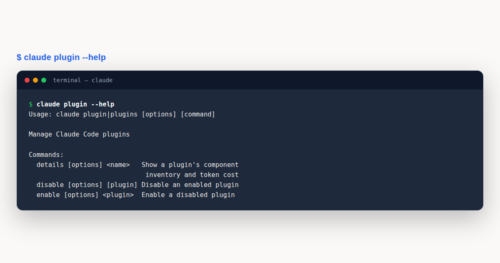
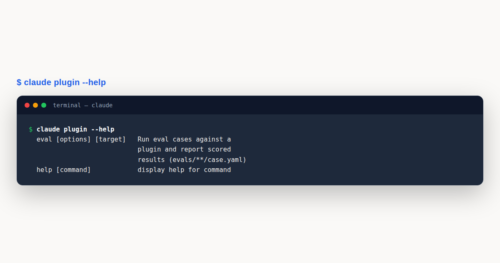
Claude Code Plugins Guide
Build and distribute plugins that bundle skills, agents, hooks, MCP servers, and LSP support into installable packages.
Continue reading12 — Introduction to AI Agents
AI agents are one of the most transformative developments in modern technology. Unlike static chatbots that simply answer questions, AI agents can plan, reason, take actions, and complete multi-step tasks with minimal human intervention. In this beginner-friendly guide you will learn exactly what AI agents are, how they work, and how you can start using… Continue reading
06 – AWS RAG Optimization Lab: Structuring Documents for Retrieval
RAG quality does not start with your vector database or your embedding model — it starts with the document you feed into it. In this hands-on RAG lab you will take a genuinely messy internal policy PDF, restructure it into clean, chunking-friendly sections, load both versions into an Amazon Bedrock Knowledge Base, and run the… Continue reading
13 — Directing Agents: Context & Boundaries
Directing AI agents effectively is one of the most valuable skills you can develop as a modern practitioner working with language models. When you know how to give an agent the right context, clear boundaries, and well-formed instructions, you unlock reliable, repeatable results from systems that would otherwise produce unpredictable or off-target output. This lesson… Continue reading
07 – AWS Vector Database for RAG: OpenSearch to pgvector
Vector database selection on AWS for RAG: compare OpenSearch, pgvector, MemoryDB, Neptune Analytics, DocumentDB, S3 Vectors, Bedrock Knowledge Bases, and Kendra in 2026.
Continue readingClaude Code Extensibility: Best Decision Guide
Claude Code extensibility gives you four distinct mechanisms to reshape the agentic coding workflow around your team’s needs. Skills, Hooks, Subagents, and Plugins each occupy a unique position on the extensibility spectrum, and choosing the wrong one wastes time, tokens, and context. This guide gives you a decision framework so you pick correctly the first… Continue reading